
What is a Timing Belt & When Do You Change It? - CarSynergy
Maintaining a car can sometimes feel like learning a second language, but understanding a few key components can save you thousands of pounds in the long run. At the heart of your engine’s health is the timing belt, a part that is often out of sight and out of mind until something goes wrong.
Simply put, the timing belt is the heartbeat of your engine’s internal mechanics. If it fails, the engine stops, often with catastrophic results. In this guide, we will break down what the timing belt is, what does it do, and crucially, when should you change your timing belt to keep your car running smoothly.
What Is a Timing Belt (Cambelt)?
What's the timing belt exactly? It is a reinforced rubber belt with teeth on the inside surface. It sits under a protective cover in your engine bay and serves as the literal "timer" for your engine’s internal combustion process.
In the UK, you will often hear people refer to this part as a "cambelt." There is no difference between the two; they are different names for the exact same component. Its primary job is to connect the top of the engine (the camshaft) to the bottom (the crankshaft), ensuring they rotate in perfect harmony.
What Does a Timing Belt Do?
If you are wondering what does a cambelt do for your driving experience, think of it as a conductor in an orchestra.
Inside your engine, pistons move up and down, and valves open and close to let air in and exhaust out. The timing belt ensures that the valves open at the precise millisecond the pistons are out of the way.
If this synchronisation is lost:
The valves could stay open when the piston rises.
The piston then strikes the valve like a hammer.
This causes heavy internal damage, often requiring a total engine rebuild or replacement.
Timing Belt vs Timing Chain – What’s the Difference?
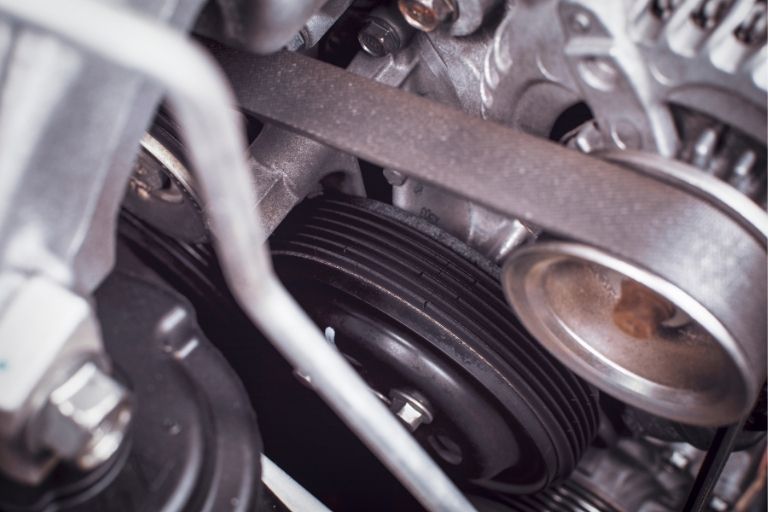
Not every car has a rubber belt; some use a metal chain. While they serve the same purpose, they have very different maintenance needs.
Feature | Timing Belt (Cambelt) | Timing Chain |
Material | High-strength rubber/synthetic | Metal links (like a bike chain) |
Maintenance | Needs periodic replacement eg 60,000 to 100,000 miles | Designed to last longer eg 100,000 to 125,000 miles |
Noise | Typically whining, ticking, or slapping noises | Can be slightly noisier such as distinct rattling or ticking sound from the engine |
Replacement Cost | Moderate | Very high (if it fails or stretches) |
When Should You Change Your Timing Belt?
Because every car is different, there is no "one size fits all" answer. However, knowing when should you change your timing belt depends largely on two factors: mileage and time.
Typical Intervals
Most manufacturers recommend changing timing belts every 50,000 to 100,000 miles, or every 5 to 10 years, whichever comes first. Even if you don’t drive many miles, the rubber material can perish and crack over time due to temperature fluctuations under the bonnet.
Factors That Shorten Lifespan
Driving Habits: Frequent short journeys and "stop-start" city driving put more strain on the belt than motorway cruising.
Oil Leaks: If oil leaks onto the rubber belt, it can degrade the material rapidly.
Manufacturer Schedules: Always check your vehicle handbook, as some high-performance engines require much more frequent changes.
What Are the Signs a Timing Belt Needs Changing?
You should stay alert for:
A Ticking Noise: A rhythmic ticking or "slapping" sound coming from the engine.
Engine Misfires: If the belt has stretched, the timing might be slightly off, causing a stutter.
Difficulty Starting: If the timing has slipped, the engine may struggle to fire up.
It is vital to remember that many belts look perfectly fine until the moment they snap. This is why following a schedule is better than waiting for a symptom.
What Happens If a Timing Belt Snaps?
If the belt snaps while you are driving, the engine will instantly lose power and shut down. In "interference engines" (which most modern cars have), the pistons will smash into the valves.
Changing timing belts preventatively is a maintenance cost; repairing a snapped belt is a recovery cost. The latter is almost always five to ten times more expensive.
How Much Does It Cost to Change a Timing Belt?
The cost of changing timing belts is largely due to the labour involved. Because the belt is tucked deep inside the engine, a mechanic often has to remove several other parts to reach it. While it may feel like a significant expense, it is a fraction of the cost of a new engine.

Should You Change the Water Pump at the Same Time?
In many cars, the timing belt also drives the water pump (which keeps the engine cool). Because the mechanic already has the engine dismantled to reach the belt, it is highly recommended to replace the water pump at the same time. This preventative step saves you from paying the same labour costs twice if the pump fails a few months later.
What Should You Check When Buying a Used Car?
When browsing for a used car, the service history is your best friend. At Car Synergy, we pride ourselves on transparency. When looking at a car’s history, check for:
Date and Mileage of Last Change: Ensure it wasn't due three years ago.
Receipts: A stamp in a book is good, but a detailed invoice proves the work was done professionally.
If a seller cannot prove when the belt was last changed, you should factor the cost of a replacement into your budget.
FAQs About Timing Belts
Is a timing belt the same as a cambelt?
Yes, these terms are interchangeable.
How often to replace timing belt?
Usually between 5 and 10 years, or based on your manufacturer's specific mileage limit.
Can a timing belt fail without warning?
Yes. Unlike brakes, which squeak or tyres which lose tread, a belt can snap without any prior noise or vibration.
Do all cars have timing belts?
No, some use timing chains. It is worth checking your manual or asking a specialist to see which your vehicle uses.
Unsure About Your Timing Belt? Here’s What to Do Next
Don't leave your engine’s health to chance. If you aren't sure how often to replace timing belt for your specific model, or if you can't find the record in your service book, it’s time to act.
At Car Synergy, we believe in quality assurance and total transparency. Whether you are looking to book a professional service, explore our range of used cars, or trade in your current vehicle for a newer model, we are here to help.